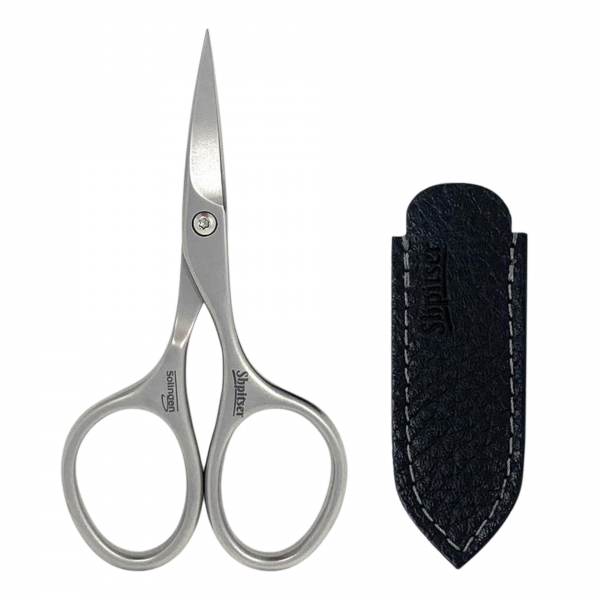
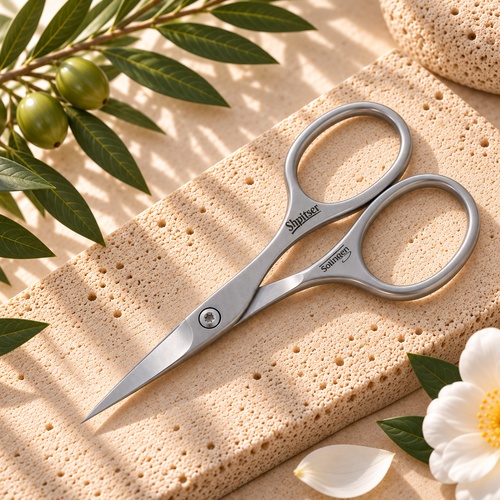
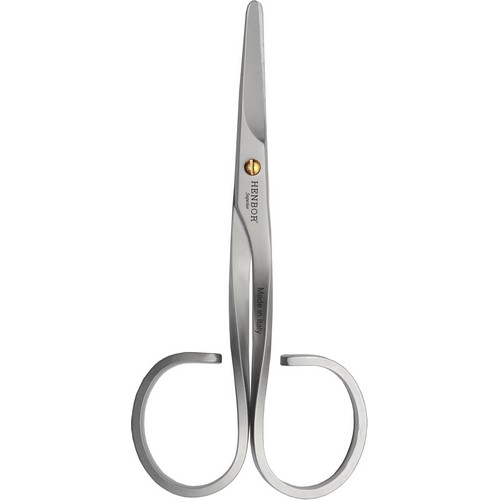
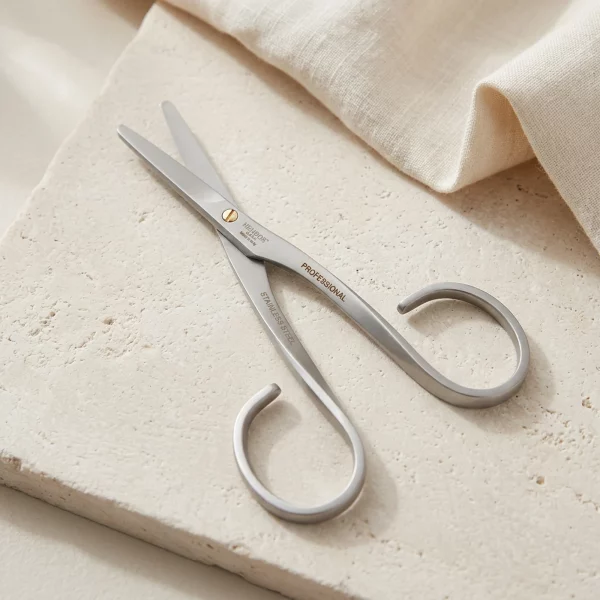
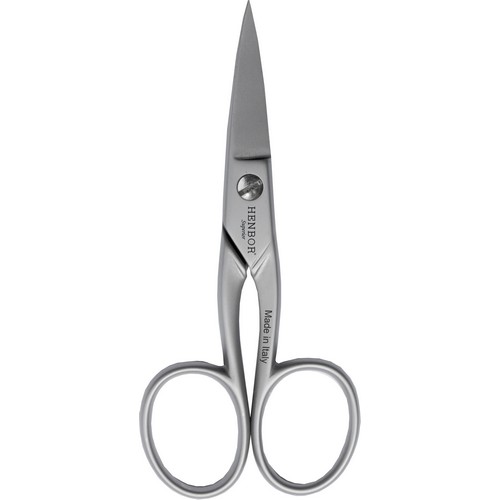
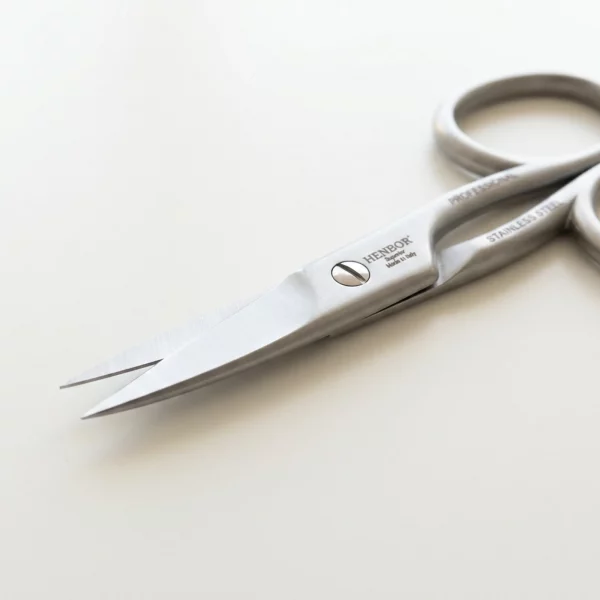
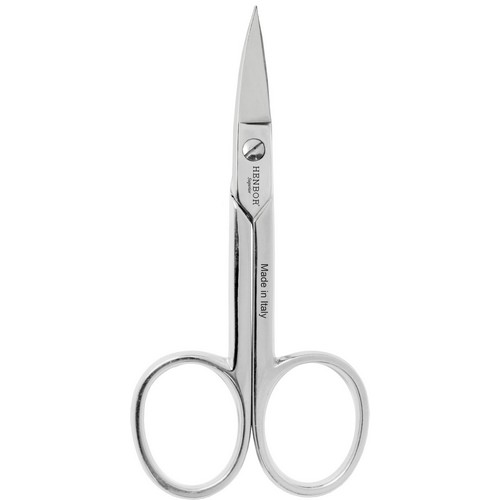
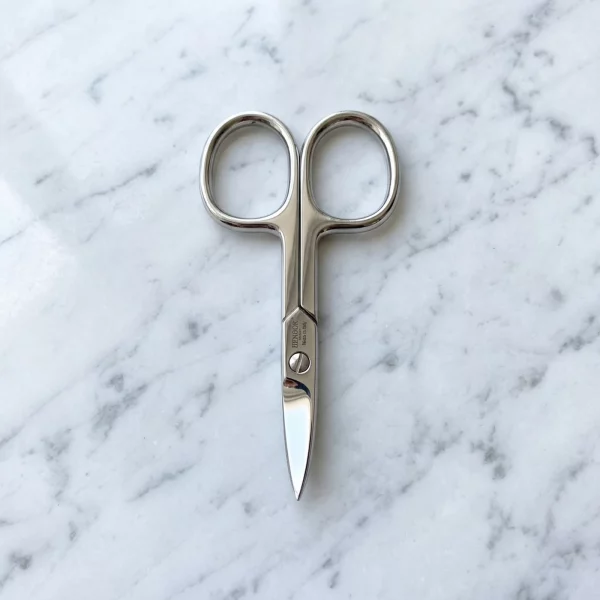
Short blades with enough edge to take a clean corner on the nail plate. Sharpened by hand, cut-tested before packing, made in Solingen and Premana.
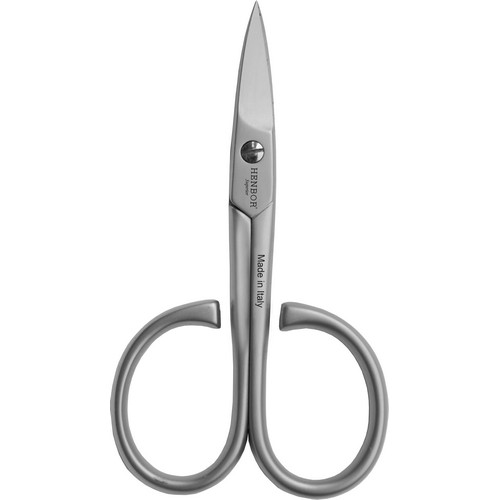
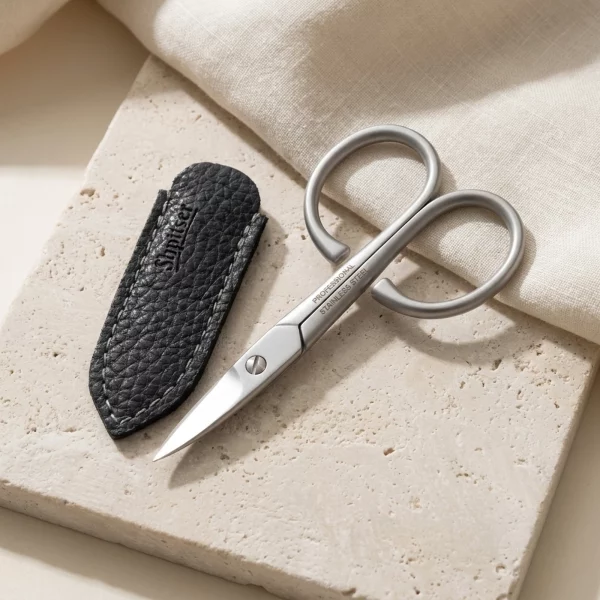
Scissors or a clipper
Scissors give control over the shape and let you see past the blade, which is why they are what professionals reach for on hands. A clipper is faster, travels better and needs no skill to use well. Neither is more professional than the other — the only difference that decides the result is whether the two edges meet along their whole length rather than touching in the middle. Nippers, scissors or clippers compares all three properly.
Safety tips are not only for children
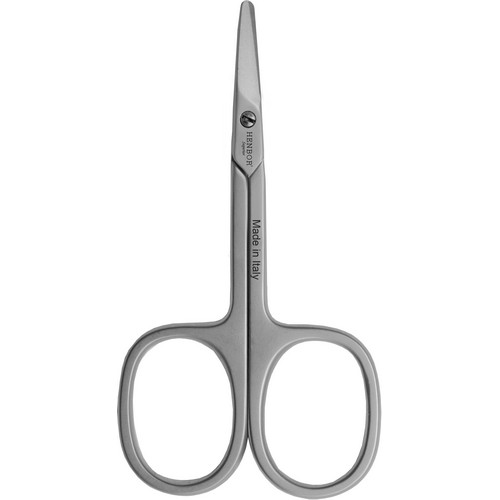
A rounded tip cannot pierce skin if the hand slips, which matters for a child's nails and for anyone cutting someone else's — an elderly parent, for instance, where the skin is thin and the light is never good enough. The rounded tip costs you nothing on the nail plate: it is the edge that cuts, not the point.
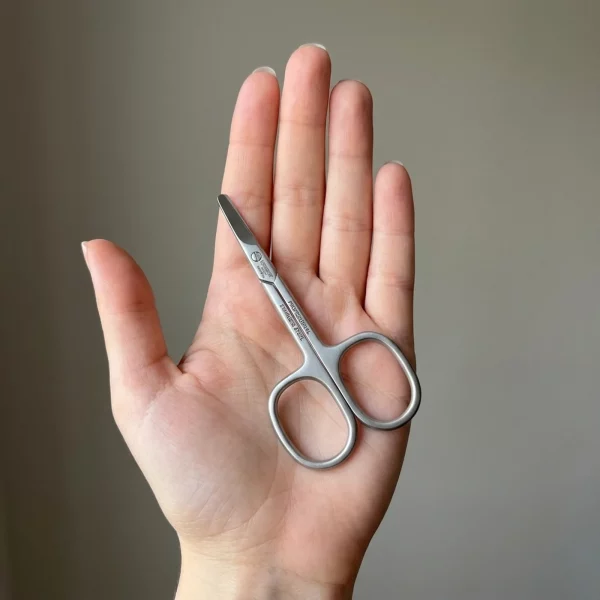
Blade length
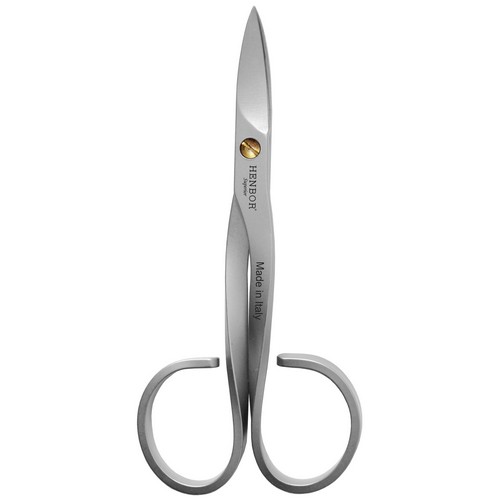
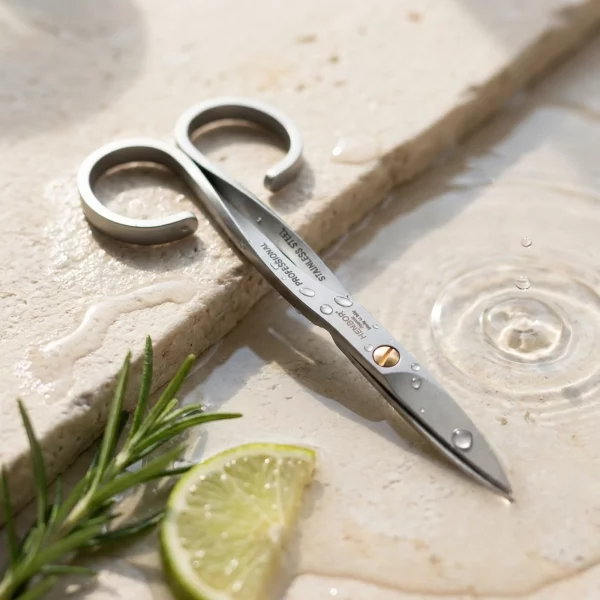
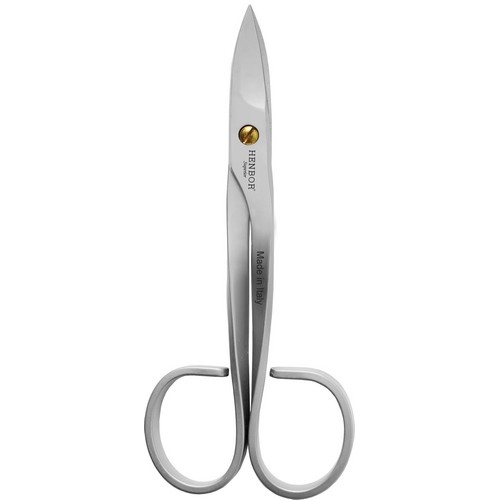
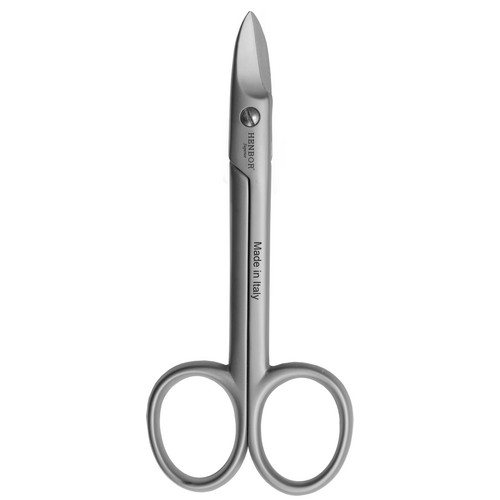
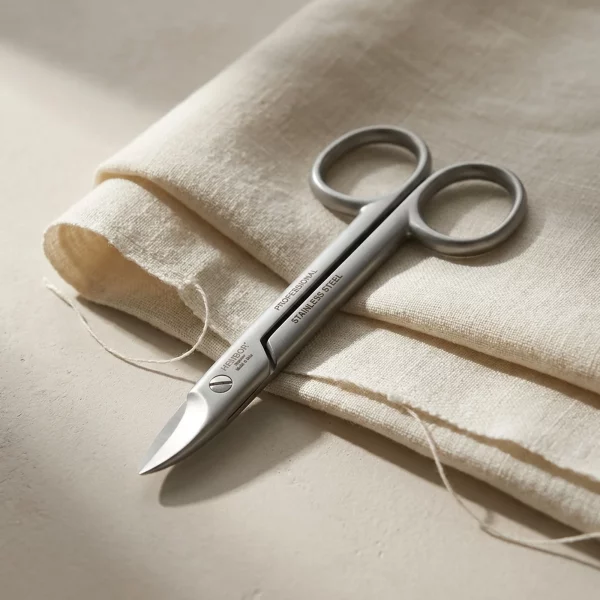
Short blades take a corner cleanly and are hard to over-cut with. Longer blades cross a wide toenail in one pass. For hands, short. For thick or ridged toenails, the shape of the tool matters more than its length — long handles and short blades put force where it is needed. Cutting thick toenails without splitting them.
What a higher price buys
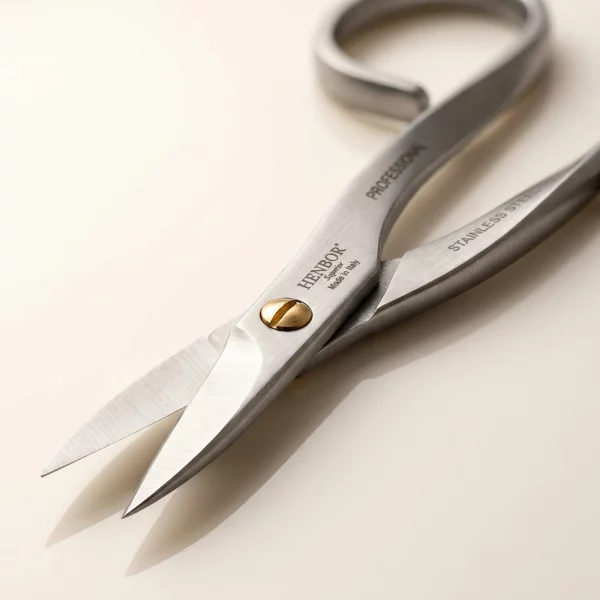
A forged blade is shaped from hot steel and tapers from joint to tip, so under spring tension the edges close fully. A stamped blade is punched from cold sheet, keeps one thickness and gaps at the ends — which is why a cheap pair folds the nail near the tips instead of cutting it. Everything else, including how long the edge holds, follows from that one difference.