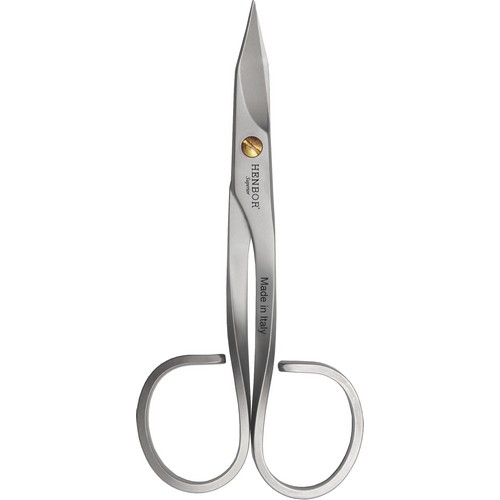
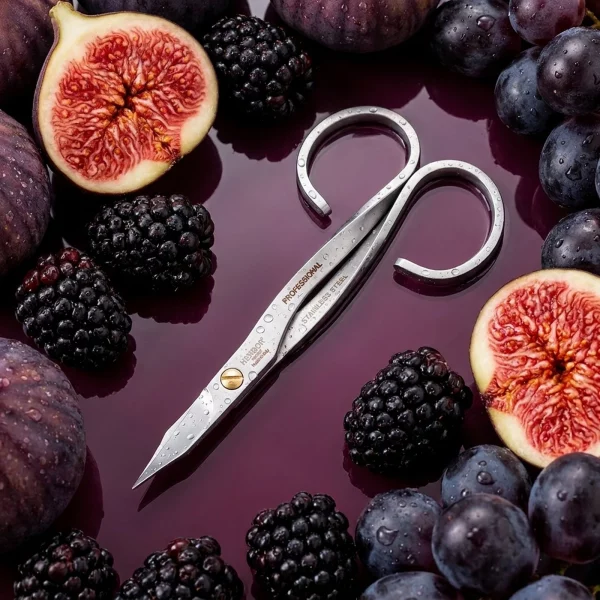
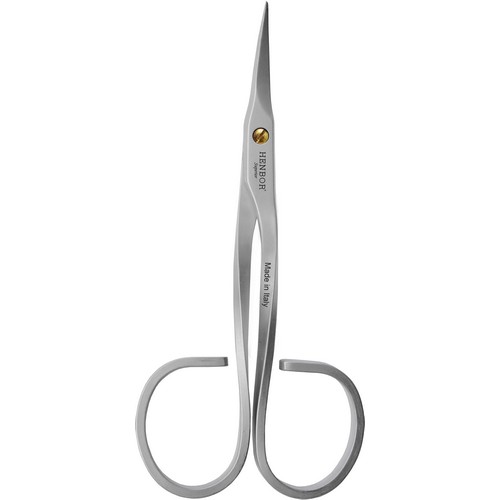
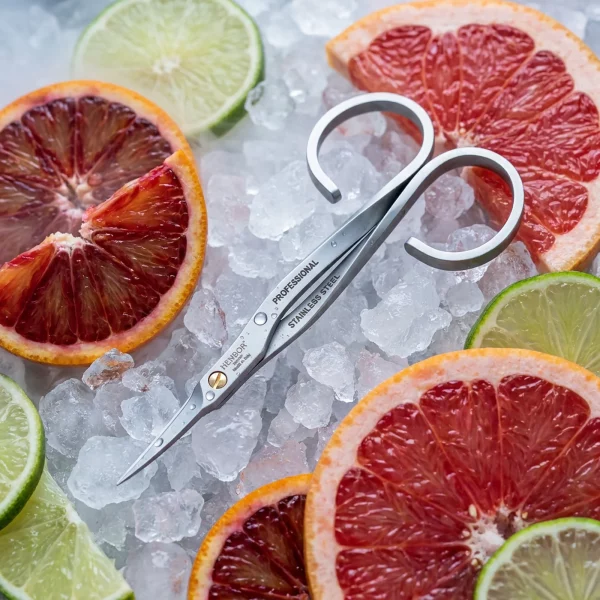
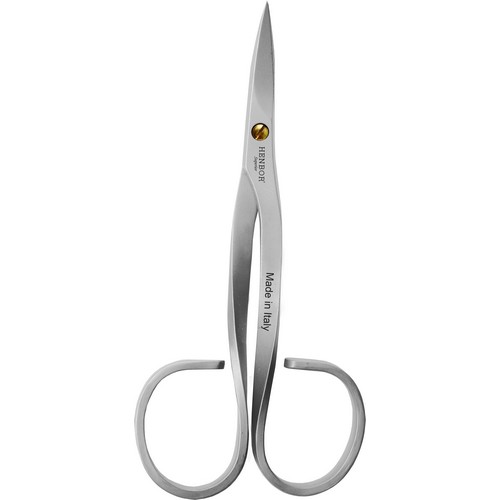
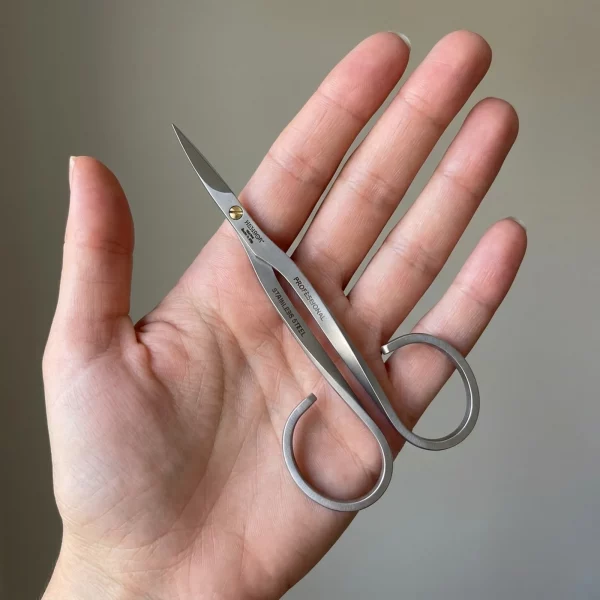
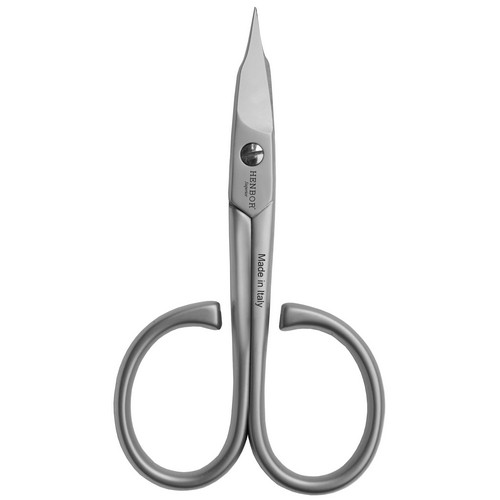
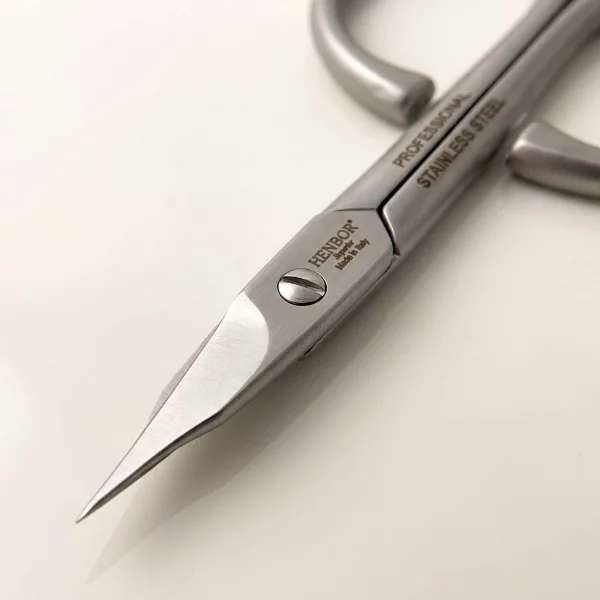
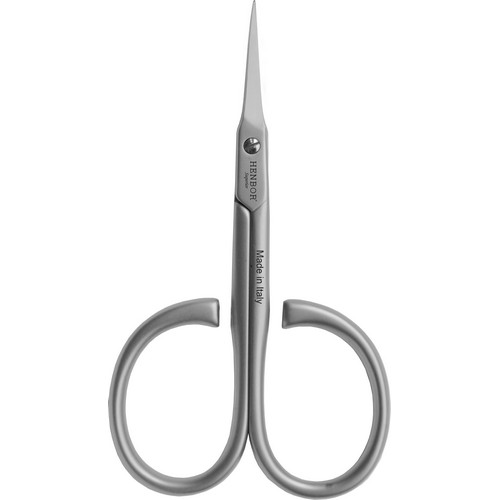
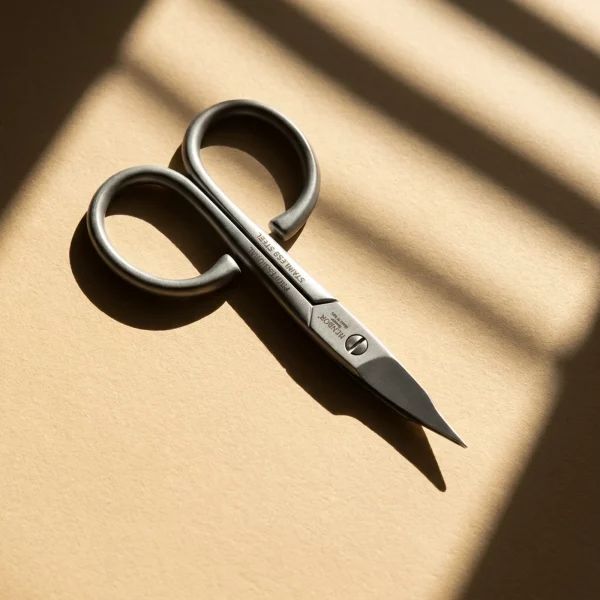
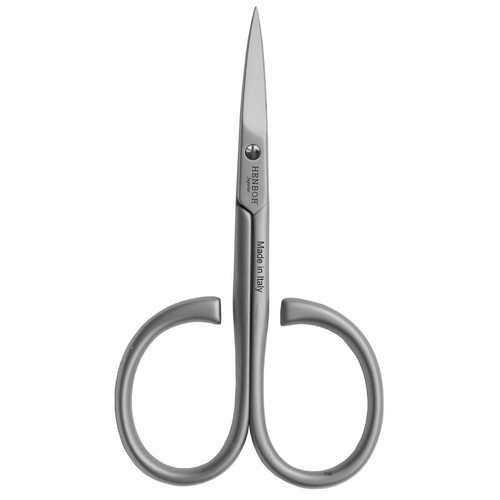
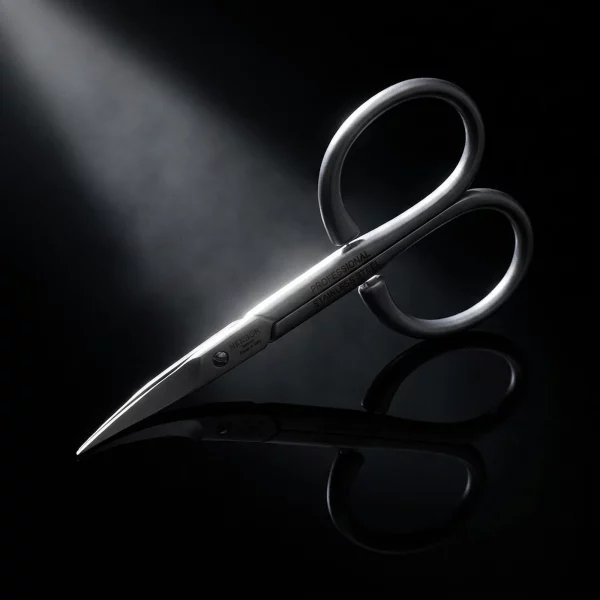
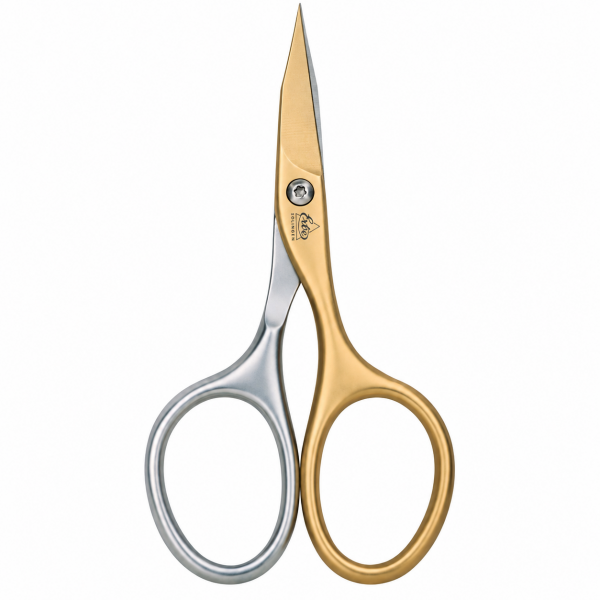
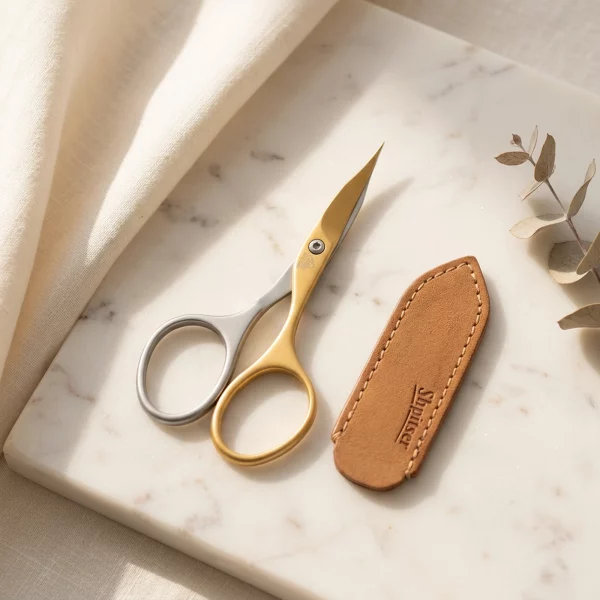
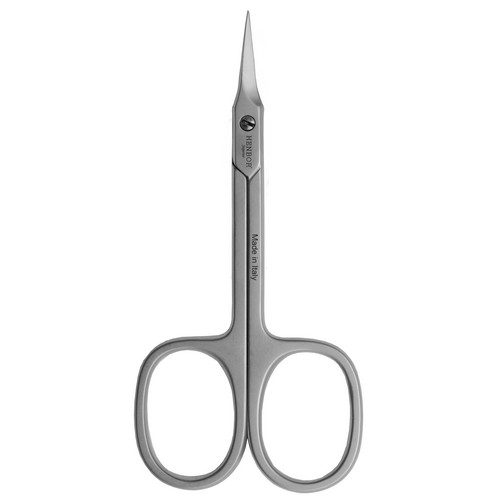
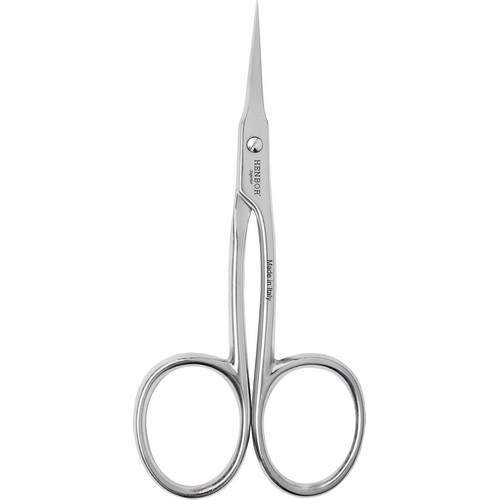
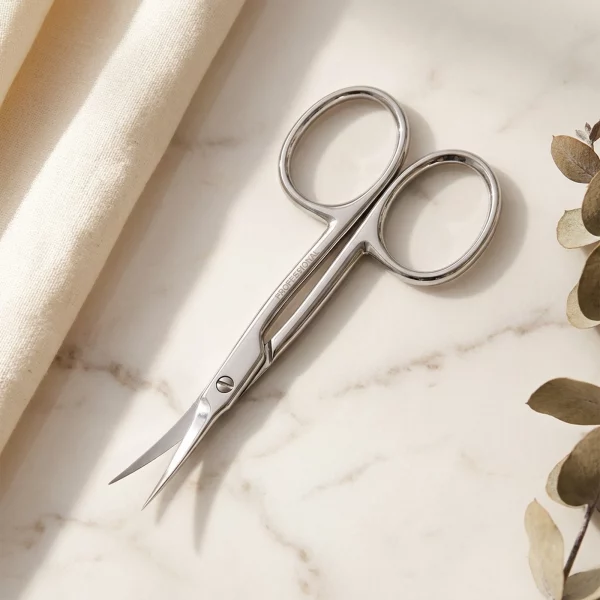
Fine curved blades ground for skin, not nails: the tips meet exactly, so a strip of cuticle is cut rather than torn. Hand-sharpened in Solingen and Premana.
Cuticle scissors or nail scissors — they are not interchangeable
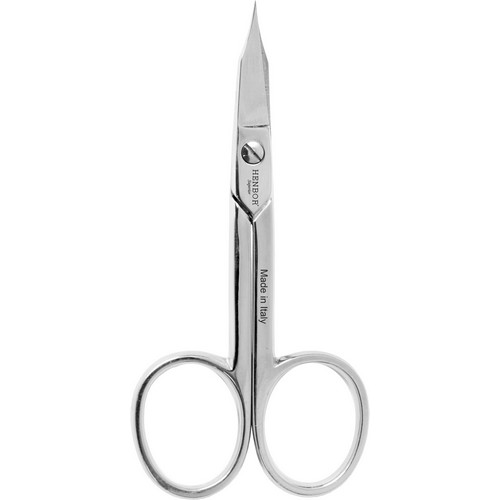
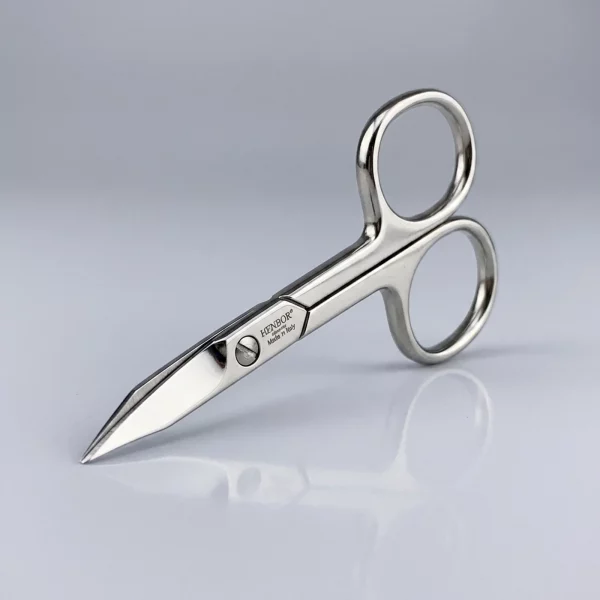
The difference is the grind, not the size. A cuticle blade is ground under a millimetre wide and tapers to a point fine enough to slide under a strip of skin; a nail blade is heavier and made to sever a plate. Use cuticle scissors on nails once and the tips chip — that is the single most common way people ruin their first good pair.
Extra-pointed or standard tips
Extra-pointed tips reach into the corner of the nail fold and lift a hangnail without catching live skin. They are also less forgiving: the point that gets into a tight corner will get into you if your hand slips. If you are working on yourself for the first time, standard tips are the safer start; extra-pointed is what you move to once the motion is automatic.
Solingen or Premana
Both are real manufacturing towns with a protected name, not marketing. Solingen instruments here are German stainless, ground rather than stamped, and priced accordingly. Premana is the Italian scissor village — the same hand-setting tradition, generally a keener edge, generally cheaper. Neither is the better town. Judge the pair in front of you: hold it closed against a window and look for light between the blades. There should be none, along the whole edge. How to tell forged from stamped in five seconds.
What actually shortens their life
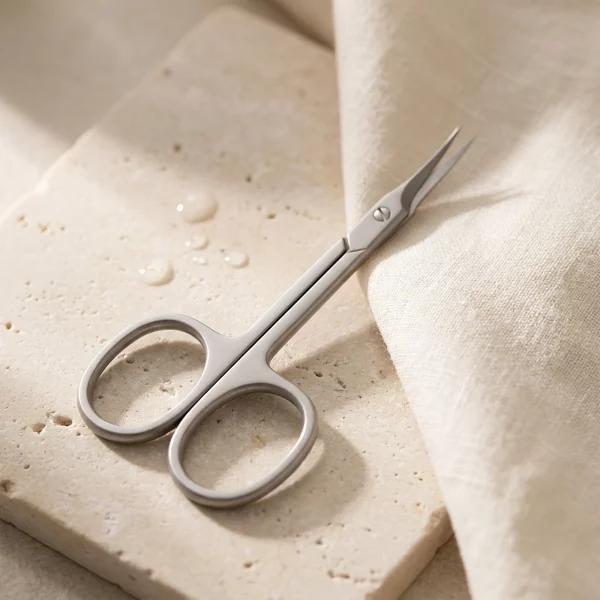
Not use — moisture. Stainless resists rust, it does not ignore it. Dry the joint after every wash and a pair outlives its owner; leave it wet in a drawer and even Solingen steel spots at the pivot, which is exactly where the tension lives. The care that actually matters.
Who made these
- Henbor — Italian scissors from Premana — a keener edge, in exchange for more careful drying. 8 in this category
Questions we get
What is the difference between cuticle scissors and nail scissors?
The grind, not the size. Cuticle blades are ground thin and curved to cut skin thinner than paper; nail blades are heavier and set for keratin. Using nail scissors on cuticle tears rather than cuts.
Extra-pointed or standard tips?
Extra-pointed reach into the corner of the nail fold and lift a hangnail without catching the live skin. They also demand a steadier hand. Standard tips are the safer everyday choice.
How do I know they have gone blunt?
Hold the closed blades up to a window. Any visible line of daylight along the cutting edges means they crush instead of cutting, and the edge needs restoring.
Can I sterilise them?
Yes. Forged stainless takes autoclaving and disinfectant. Dry the joint afterwards — standing moisture in the pivot is what starts corrosion, not the disinfectant itself.