#Sharpening
An edge is not a line, it is two ground surfaces meeting at an angle, and every term here describes some aspect of that geometry — the bevel, the grind, the angle, what «hand-sharpened» means when it is true. Worth being clear about one thing: we do not sharpen instruments. «Hand-sharpened in Solingen» describes how a tool was made — the edge was ground and tested on the cut before it left the workshop. Restoring an edge years later is a separate craft that belongs to a grinding workshop with the right wheels; a flat stone will flatten the curve of a cuticle blade and leave it weaker than before. These entries explain what such a workshop actually does, so you can tell a competent one from someone with a belt sander.
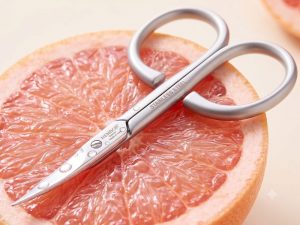
A bevel ground as a curve rather than a flat facet. It puts more steel behind the very edge, which is why fine points survive on convex-ground blades.

The final edge put on at a wheel by a person who watches how the two blades meet. On curved instruments no machine has replaced this step.