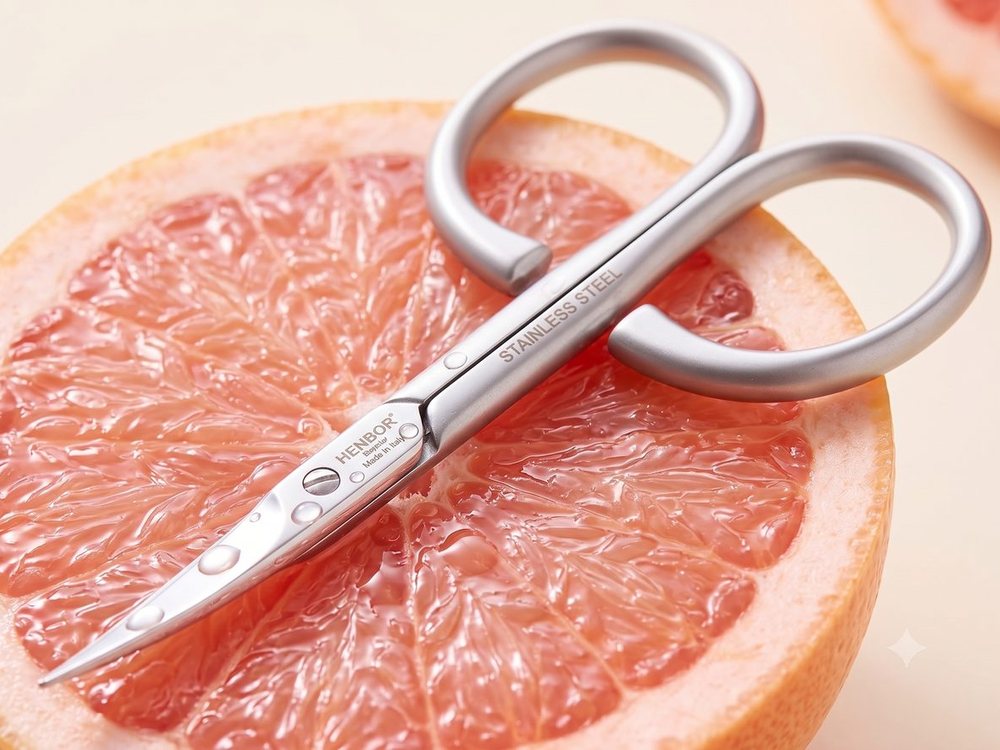
The shape behind the edge
Most bevels are flat: two planes meeting at an angle. A convex bevel replaces the flat with a gentle curve, so the steel thickens progressively as you move back from the apex. The angle at the very edge can stay just as acute, but there is more metal supporting it a fraction of a millimetre behind.
In short
- Shape: curved bevel instead of a flat facet
- What it buys: support behind a fine edge, so points chip less
- Cost: ground on shaped wheels or a slack belt — slower to make, slower to restore
Not to be confused with
A hollow grind, which is the opposite: metal removed behind the edge for an easier, thinner cut on straight blades.
Why cuticle scissors in particular
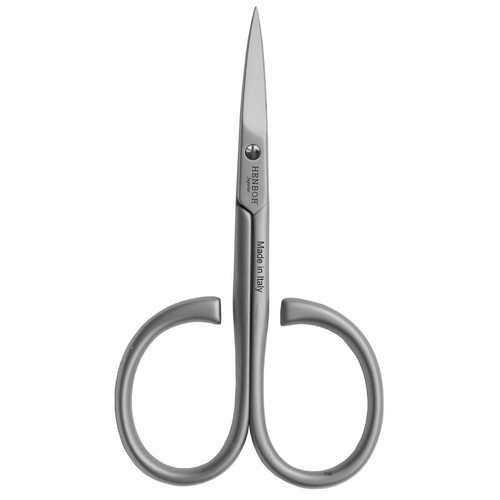
An extra-pointed cuticle scissor has tips well under a millimetre wide. Ground flat, those tips are unsupported and will chip on the first thick nail edge they meet by accident. Ground convex, the same tips have a wedge of steel behind them and survive the mistake. The instrument feels identical in the hand and lasts several times as long.
Living with it
Do not run a convex-ground blade over a flat stone or a pull-through sharpener; you will flatten the curve and leave a weak edge that chips. Restoring a convex edge belongs with whoever has the right wheels — a grinding workshop, not a kitchen stone.
Instruments where this matters
Questions we get
Is a convex edge sharper?
At the same angle it is not sharper at the apex; it is stronger just behind it. In practice that means it stays sharp longer on fine points.
Does it need special grinding?
Yes — a flat stone will grind the curve away. It is done on a slack belt or a shaped wheel, which is one reason the job is best left to a grinding workshop.
Which instruments use it?
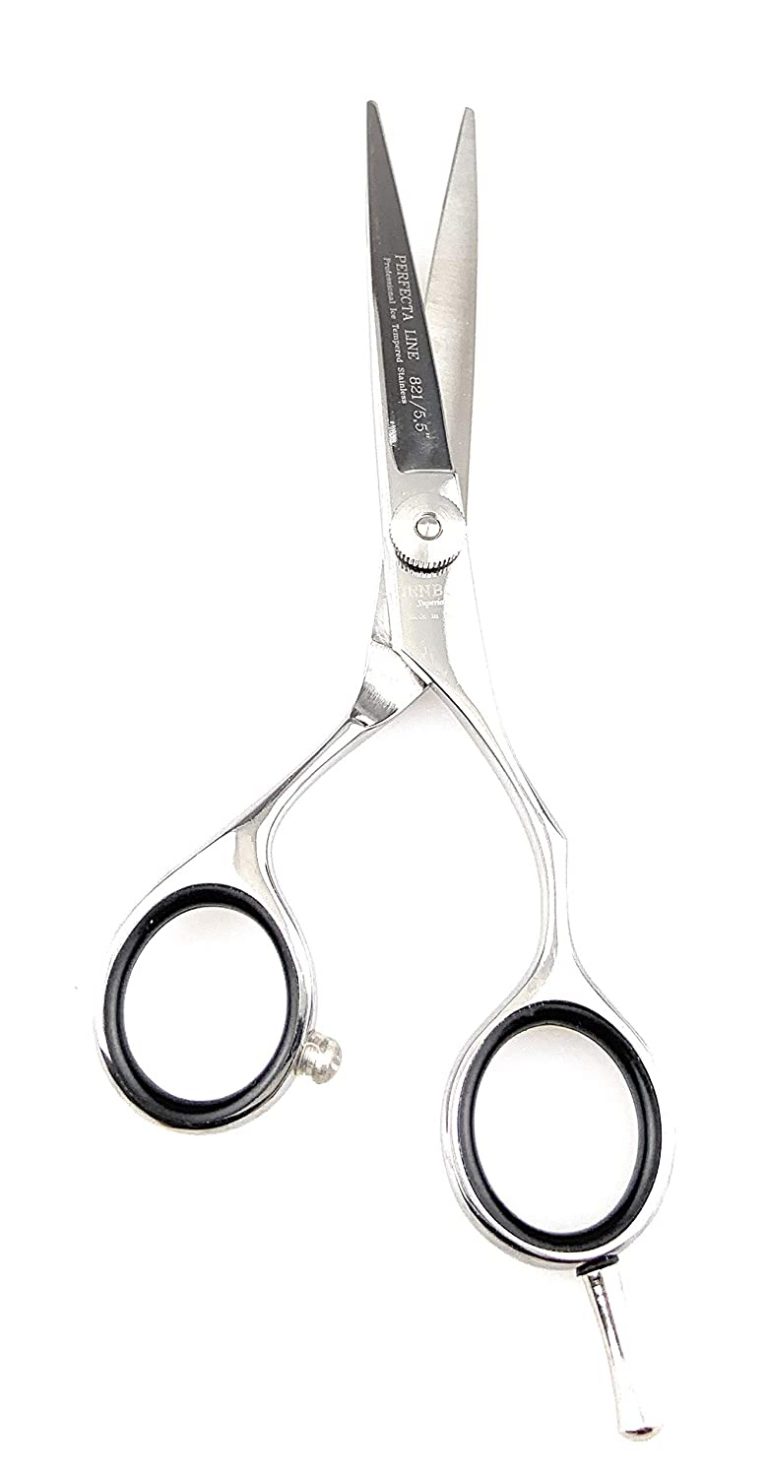
Fine-pointed cuticle scissors and better hair shears, most often. Clippers and heavy nippers are usually flat-ground.
*This page explains a word, nothing more. It is not medical advice and does not replace a consultation about a specific condition of the nail or the skin around it.
A German martensitic stainless steel used for grooming and surgical instruments — hard enough to take a fine edge, stable enough to resist rust.
The heat treatment that sets an instrument’s final hardness. Under-hardened steel goes blunt in months; over-hardened steel chips at the tip.
The final edge put on at a wheel by a person who watches how the two blades meet. On curved instruments no machine has replaced this step.
The standard measure of how hard a blade is. Nail instruments sit around 54–58 HRC — high enough to hold an edge, low enough not to chip.