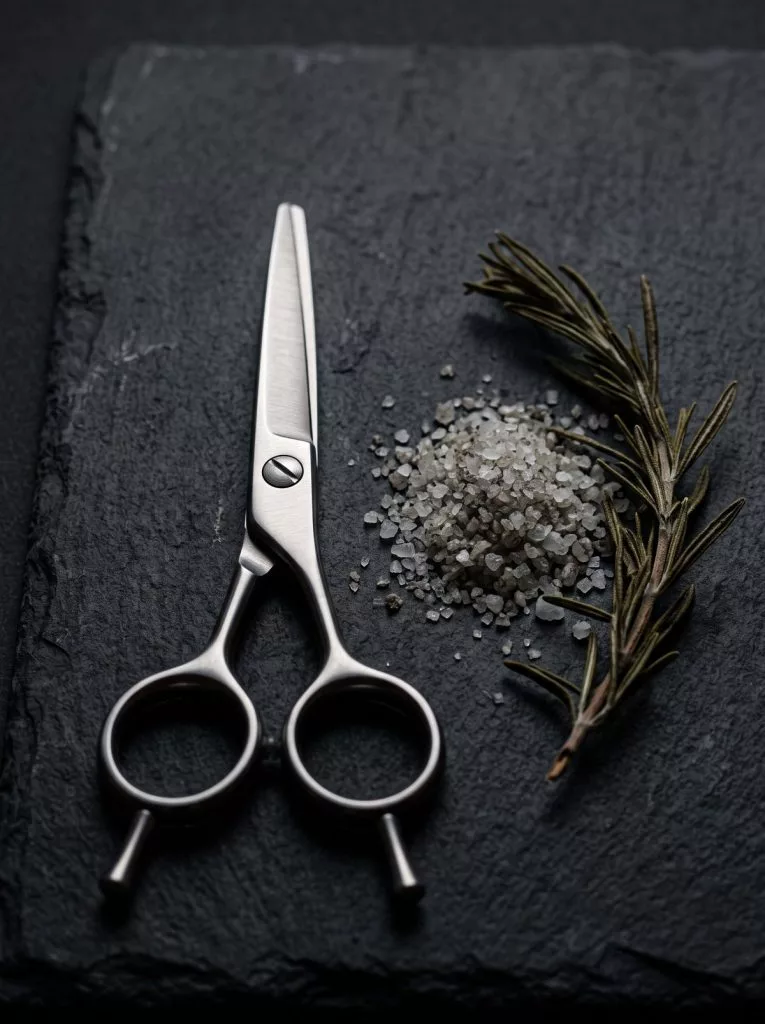
The last five minutes of a two-week process
After forging, hardening and rough grinding, an instrument still does not cut. The final edge is applied at a fine wheel, and on scissors and nippers it is applied to a pair: the two blades are ground so that the point of contact travels smoothly from the joint to the tip as they close. A grinder checks this by closing the instrument against the light, against a strip of thin paper, against a fingernail.
In short
- What it is: the final edge and the fitting of two blades to each other
- Why by hand: curved edges and matched pairs need correction that machines do not make
- What it feels like: the cut is quiet, and the nail is cut rather than folded
Not to be confused with
Polishing. A mirror finish is cosmetic; it says nothing about whether the edges meet.
What a good closure sounds like
Close a well-fitted pair of scissors slowly. There should be a single continuous whisper of contact, no click, no gap you can see against a window, and no point where the blades suddenly go slack. A cheap pair will contact near the joint, lose contact halfway and slap shut at the tip.
The part that makes an instrument worth keeping
Everything else — steel, hardness, finish — can be bought. This step is the reason the Solingen grinding shops still exist, and the reason a specialist can restore an edge ten years later and have the instrument cut as it did new. It is also the least visible part of the price.
Instruments where this matters
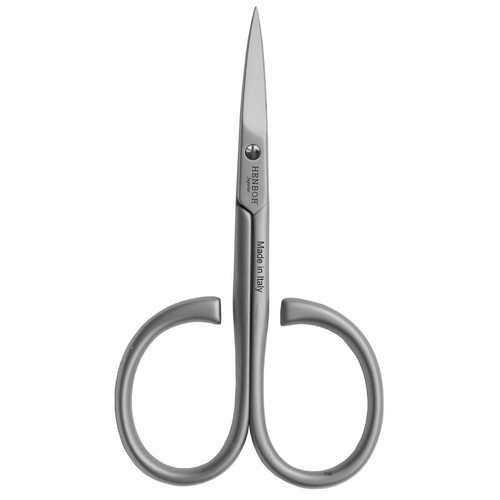
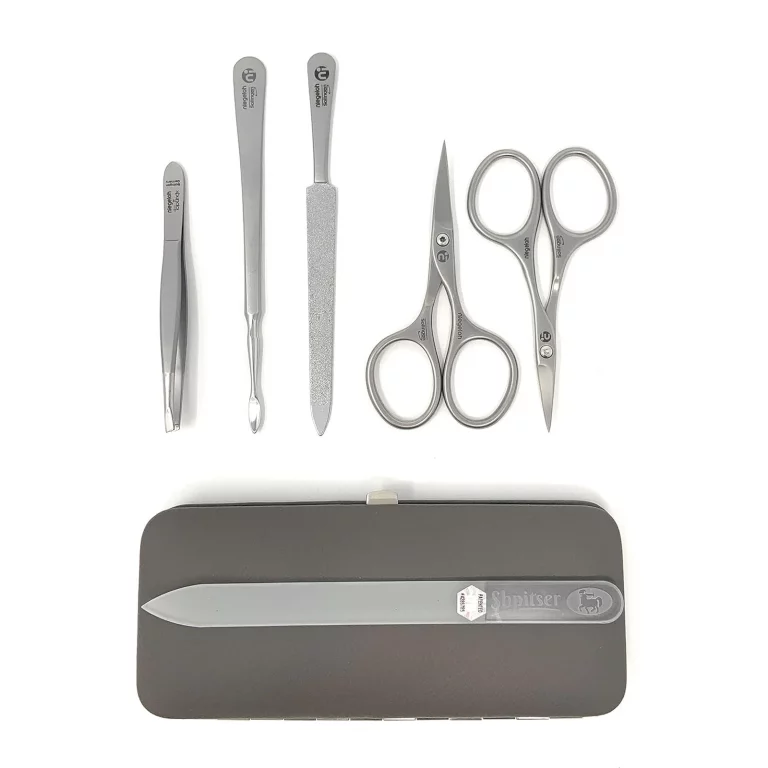
Questions we get
Why can a machine not do it?
It can, on straight edges. On a curved blade the contact point moves and the pressure must change with it, and the two blades of a pair are matched to each other rather than to a specification. That correction is still done by eye and feel.
How often does the edge need restoring?
Home use: every few years, or when the tips stop meeting cleanly. Salon use: several times a year. Restoring an edge removes very little metal — a well-made instrument survives dozens of visits to a workshop.
Can I sharpen cuticle scissors myself?
Not sensibly. The bevel is narrow, curved and matched between blades; a stone or a household sharpener usually ends the instrument’s life. Send them to someone with the right wheels.
*This page explains a word, nothing more. It is not medical advice and does not replace a consultation about a specific condition of the nail or the skin around it.
A soft full-grain leather tanned to stay supple. Used for instrument cases because it takes daily handling without cracking at the folds.
The standard measure of how hard a blade is. Nail instruments sit around 54–58 HRC — high enough to hold an edge, low enough not to chip.
The cutting head of a nipper, measured in millimetres or as a fraction. The longer the jaw, the more it removes per cut — and the less forgiving it is.
A file whose abrasive is etched into tempered glass rather than glued on. It sheds no grit, washes clean, and keeps its cut for years.