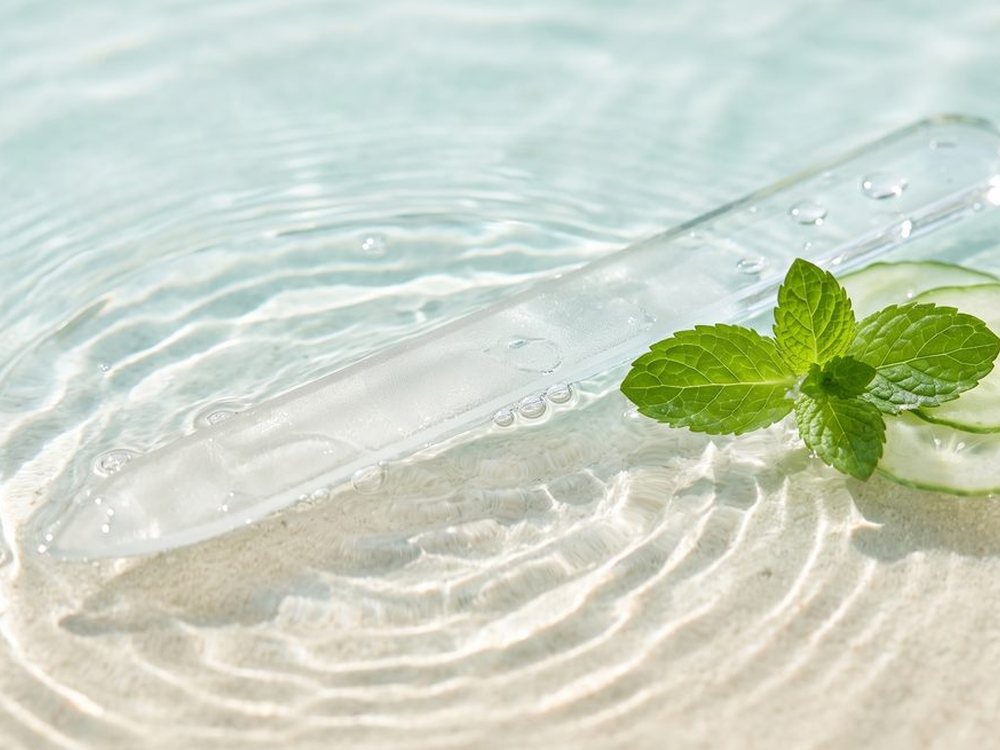
How it differs from a board
An emery board is paper or foam with abrasive grit glued to it. The grit sheds with use, the surface loads with dust, and the board is finished within weeks. A glass file is tempered glass whose working surface has been chemically etched into a fine, regular abrasive pattern. The abrasive is the tool; there is nothing to shed.
In short
- Abrasive: etched into the glass, not glued on
- Life: years of use; washable and disinfectable
- Result: a smoother free edge than a paper board leaves
Handling
It is glass. It survives being dropped in a drawer and does not survive being dropped on tile — a sleeve is not decoration.
Why the edge feels different
A coarse, uneven abrasive tears fibres at the free edge and leaves them standing, which is what catches on fabric. The fine, even pattern of an etched file cuts them level. The nail edge feels sealed, and there is less to peel afterwards.
Choosing one
Look for tempered glass and an etched — not printed or coated — surface. Coated “glass-look” files exist, behave like boards and fail like boards.
Instruments where this matters
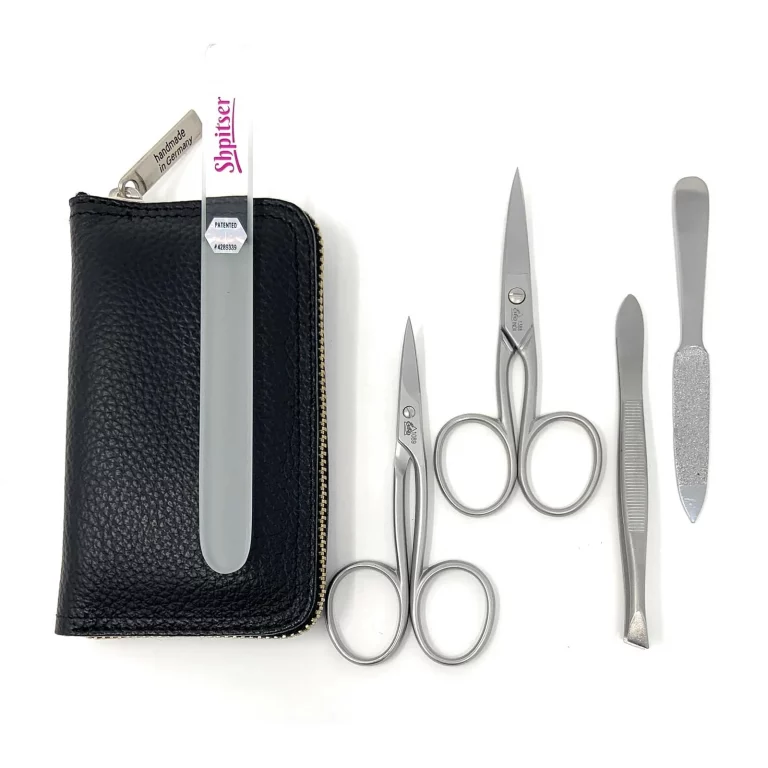
Questions we get
Do glass files wear out?
Eventually, but slowly — the abrasive is the glass itself, not a coating. Most people break one before they wear one out.
Are they gentler than emery boards?
They leave a smoother edge because the abrasive pattern is finer and even, which is why the free edge feels sealed rather than fuzzy after filing.
How do I clean one?
Soap and warm water, or alcohol. Unlike a paper board it can be washed repeatedly, which is why salons use them.
*This page explains a word, nothing more. It is not medical advice and does not replace a consultation about a specific condition of the nail or the skin around it.
A protected designation of origin for German blades: an instrument may carry the name only if the decisive steps were done in the Solingen district.
Two ways to get a blade blank. Forging shapes hot steel under force; stamping cuts a cold shape out of sheet. The difference shows up years later.
A German martensitic stainless steel used for grooming and surgical instruments — hard enough to take a fine edge, stable enough to resist rust.
The cutting head of a nipper, measured in millimetres or as a fraction. The longer the jaw, the more it removes per cut — and the less forgiving it is.