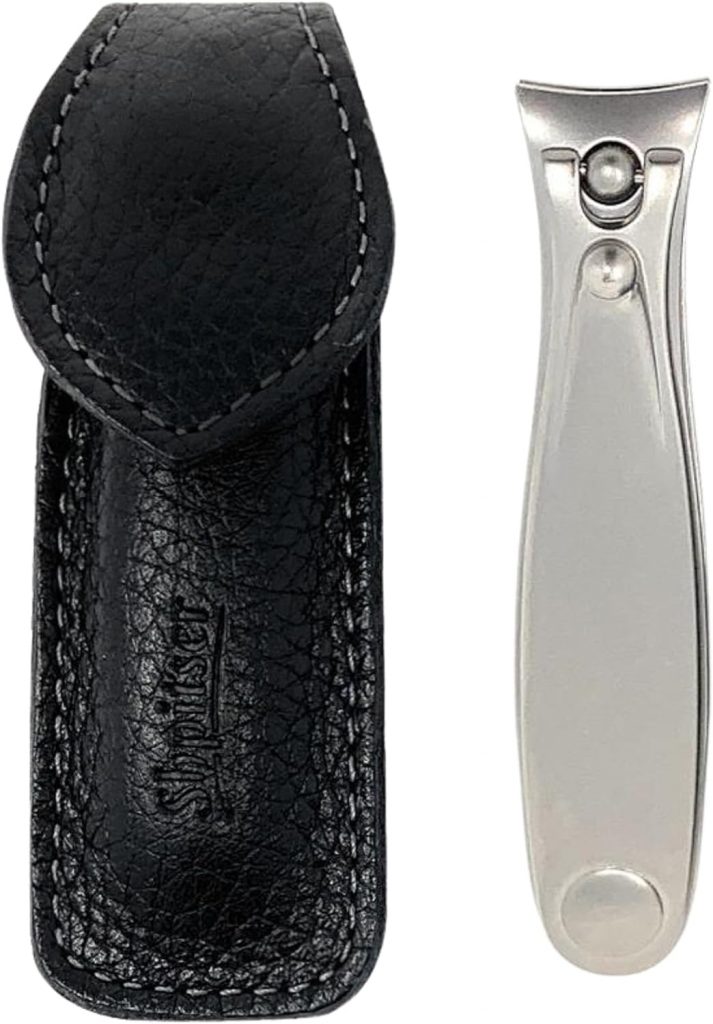
What the name refers to
TopInox is a martensitic stainless steel developed for instruments — the same broad family used for scalpels and dental tools. Martensitic means it can be hardened by heat treatment, which is what separates it from the softer austenitic stainless used for sinks and cutlery. The chromium content, above roughly 13 percent, is what makes it stainless: chromium reacts with air to form a thin oxide layer that reforms whenever the surface is scratched.
In short
- Type: hardenable (martensitic) stainless steel
- Why it is used: takes a fine edge, resists corrosion, tolerates disinfection
- Where you meet it: nippers, clippers, tweezers, cuticle scissors
Role in the instrument
| Edge | Hard enough to hold a fine edge through repeated use. |
| Corrosion | Self-repairing chromium oxide layer tolerates water and alcohol. |
| Service life | Can be reground many times without losing its temper. |
The trade it represents
Steel choice is always a compromise between hardness, toughness and corrosion resistance. Push hardness up and the edge lasts longer but chips. Push chromium up and the steel resists rust but will not take the same fine edge. Instrument steels like TopInox sit deliberately in the middle: hard enough for a nail, tough enough not to chip on it, stable enough to survive a wet bathroom.
How to look after it
Dry after contact with water, keep it out of a sealed pouch while damp, and do not store it touching plated carbon-steel instruments. Alcohol wipes are fine. Household bleach is not — chloride attacks the passive layer, which is exactly the thing keeping the steel stainless.
Questions we get
Is TopInox the same as surgical steel?
They belong to the same family of hardenable stainless steels used for instruments. “Surgical steel” is a loose phrase covering several grades; TopInox is a specific one.
Can TopInox rust?
It resists corrosion, it is not immune to it. Left wet in a closed case, or stored against a rusting instrument, it will spot. Dry it after use and it stays clean for decades.
Is it harder than carbon steel?
Usually slightly softer at the same finish. Carbon steel takes a keener edge; stainless keeps a good edge with far less maintenance. Most people are better served by stainless.
*This page explains a word, nothing more. It is not medical advice and does not replace a consultation about a specific condition of the nail or the skin around it.
The cutting head of a nipper, measured in millimetres or as a fraction. The longer the jaw, the more it removes per cut — and the less forgiving it is.
The heat treatment that sets an instrument’s final hardness. Under-hardened steel goes blunt in months; over-hardened steel chips at the tip.
A bevel ground as a curve rather than a flat facet. It puts more steel behind the very edge, which is why fine points survive on convex-ground blades.
A soft full-grain leather tanned to stay supple. Used for instrument cases because it takes daily handling without cracking at the folds.