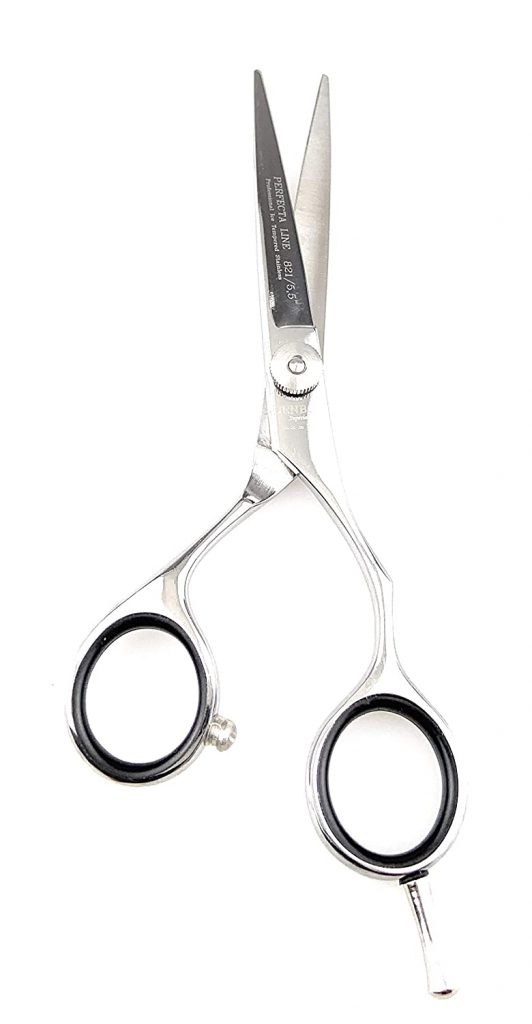
Two steps, in this order
Hardening heats the blade to around 1000 °C, holds it there, then quenches it — into oil, into a gas stream, sometimes further into a sub-zero bath. The rapid cooling locks the steel into a hard, strained structure called martensite. Straight out of the quench the blade is at its hardest and also brittle enough to snap.
Tempering reheats it, far more gently, to a few hundred degrees. That relieves the internal stress and trades a little hardness for a lot of toughness. The temperature chosen here is the single decision that determines how the finished instrument behaves.
In short
- Hardening: heat, then quench — makes the steel hard and brittle
- Tempering: gentle reheat — gives back toughness, costs a little hardness
- Result: the hardness figure quoted in HRC, and the instrument’s whole character
What goes wrong
Too soft and the edge rolls over within months. Too hard and fine points chip the first time they meet a thick nail.
Why cheap instruments fail here first
Heat treatment is invisible. A blade that was rushed through a furnace looks identical to one that was soaked at temperature, quenched under control and tempered twice. The difference shows up after a few dozen cuts, when the edge stops biting. This is the step that most often separates a $6 pair of scissors from a $60 pair made of nominally similar steel.
What you can check
Ask for the hardness figure — see Rockwell hardness. A maker who controls the process will quote a range, typically 54–58 HRC for nail instruments. Silence usually means the number is not worth printing.
Instruments where this matters
Questions we get
What is ice-tempered steel?
A marketing name for sub-zero treatment: after quenching, the blade is cooled well below freezing so more of the steel converts to its hard structure. Done properly it makes a measurable difference; the phrase alone guarantees nothing.
Can an instrument be re-hardened later?
In principle yes, in practice no. Re-hardening warps thin blades and destroys the fitted closure of scissors and nippers. Sharpening removes metal; it does not touch hardness.
Does hardness alone make a good blade?
No. A very hard blade that has not been tempered is brittle. The pair of steps matters: hardening for the edge, tempering for the nerve to survive being used.
*This page explains a word, nothing more. It is not medical advice and does not replace a consultation about a specific condition of the nail or the skin around it.
A bevel ground as a curve rather than a flat facet. It puts more steel behind the very edge, which is why fine points survive on convex-ground blades.
The final edge put on at a wheel by a person who watches how the two blades meet. On curved instruments no machine has replaced this step.
The standard measure of how hard a blade is. Nail instruments sit around 54–58 HRC — high enough to hold an edge, low enough not to chip.
Two ways to get a blade blank. Forging shapes hot steel under force; stamping cuts a cold shape out of sheet. The difference shows up years later.