#Steel
Almost every claim in this trade is a claim about steel, and almost none of them are comparable. «Surgical stainless» is a marketing phrase with no standard behind it. «German steel» can mean steel milled in Germany and worked anywhere. «TopInox» is a specific alloy with a specific hardness. The entries here define what the words actually denote: the alloys, the hardness scales, what hardening and tempering do to the same piece of metal, and the trade-off that runs through everything — a harder edge holds longer and chips more easily, a softer one forgives abuse and dulls sooner. Carbon against stainless is the same trade-off in different clothes, and the honest answer to «which is better» is «which one will you dry after use».
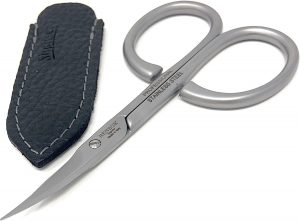
Two ways to get a blade blank. Forging shapes hot steel under force; stamping cuts a cold shape out of sheet. The difference shows up years later.
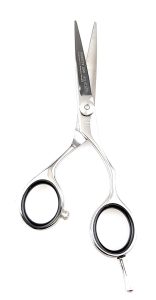
The heat treatment that sets an instrument’s final hardness. Under-hardened steel goes blunt in months; over-hardened steel chips at the tip.
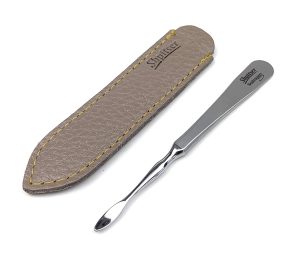
The finishing treatment that builds the chromium oxide layer on stainless steel. It is what makes an instrument stainless — and it can be damaged.
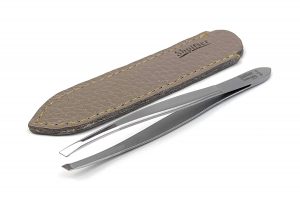
The standard measure of how hard a blade is. Nail instruments sit around 54–58 HRC — high enough to hold an edge, low enough not to chip.
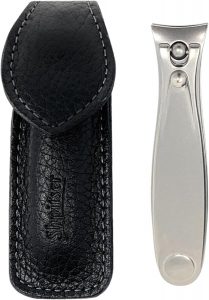
A German martensitic stainless steel used for grooming and surgical instruments — hard enough to take a fine edge, stable enough to resist rust.