Pterygium
What the word describes
Pterygium is skin that has extended forward and bonded to the surface of the nail plate — literally growing along with it. Unlike the cuticle, which is dead tissue sitting on the plate, this is living tissue attached to it. Pull on it and the skin follows.
In short
- What it is: living skin adhering to the nail plate
- How it differs: a cuticle releases when softened; this does not
- Grooming limit: soften and leave alone — it is not a case for scissors
Why it is worth naming
Because the usual response to “stubborn cuticle” is more force, and force is exactly wrong here.
What careful practice looks like
Soften with warm water or an oil, push nothing that resists, and keep the area conditioned. If the attachment is spreading, changing colour or painful, that is a question for a dermatologist rather than a manicure decision.
The reverse case
The term is also used for the opposite pattern, where tissue grows forward from under the free edge. Both are described the same way and both are handled the same way: gently, and not with a blade.
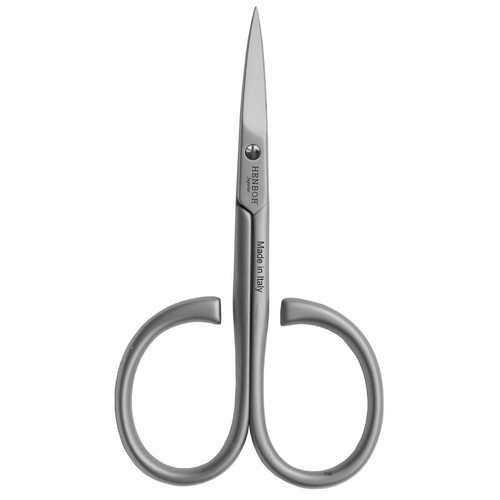
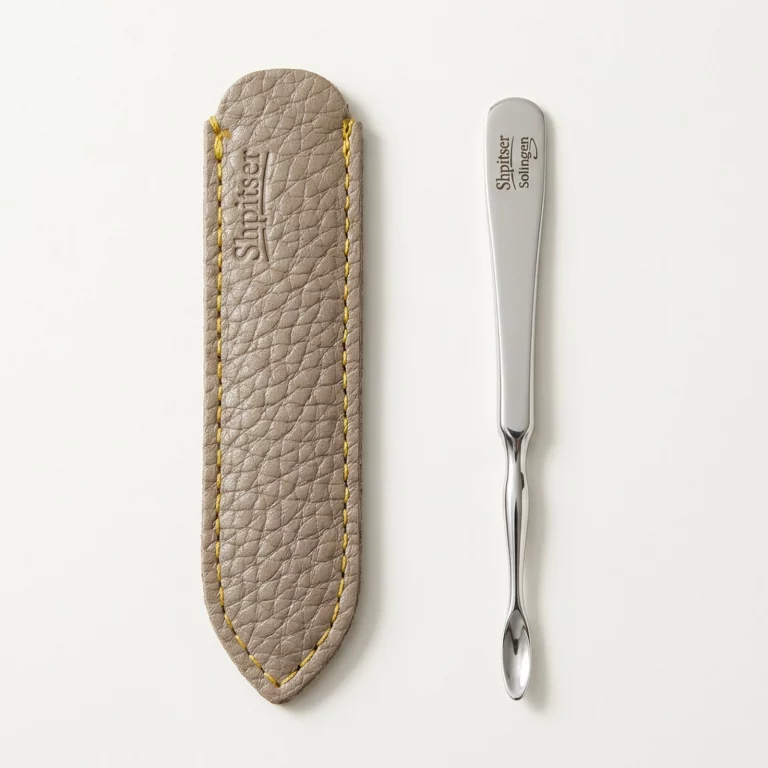
Instruments where this matters
Questions we get
How do I tell it from a thick cuticle?
A cuticle lifts when softened. Pterygium stays attached to the plate and pulls the skin with it, because it is living tissue that has bonded to the nail.
Can it be removed at home?
No. Forcing it separates living skin from the nail and leaves an open wound. Softening and regular gentle care is the limit of what grooming can do.
What causes it?
Several things, from injury to circulation problems to skin conditions. Because the causes differ, this is a case for a professional opinion rather than a technique.
*This page explains a word, nothing more. It is not medical advice and does not replace a consultation about a specific condition of the nail or the skin around it.
The part of the nail that has grown past the fingertip and is no longer attached to the bed — the only part that is actually being cut or filed.
The thin band of dead tissue that the nail carries out from under the skin fold. It is the part that can be removed — unlike the living fold behind it.
A nail edge pressing into the skin fold beside it. Most often started by cutting the corner down — and made worse by cutting it again.
The skin sealing the underside of the nail where the free edge lifts away. Sensitive, easily injured, and the reason short nails can feel tender.