Free edge
The part with no living tissue
The free edge is the nail beyond the point where it separates from the bed, sealed underneath by the hyponychium. It is entirely dead keratin. That is why cutting it is painless — and also why any damage there is permanent until it grows out. Nothing repairs a split free edge; it can only be filed smooth and outgrown.
In short
- What it is: nail grown past the fingertip, unattached
- Living tissue: none
- Damage: does not heal — it grows out
Rate of growth
Fingernails roughly 3 mm a month, toenails about half that. A split at the tip takes months to disappear.
Cutting versus filing
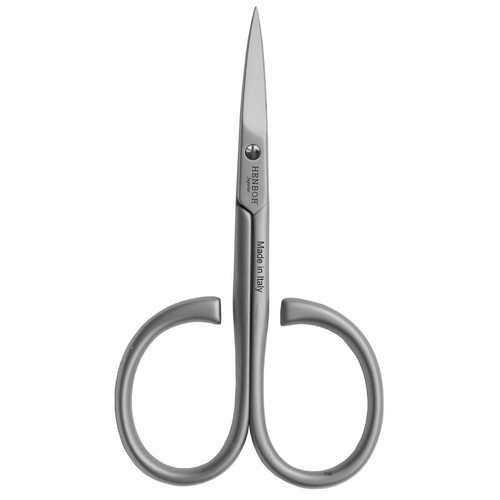
Clippers and scissors work fast and leave a cut face that can split if the blades crush rather than cut — the case for edges that actually meet. A file finishes the shape and levels the fibres a cut leaves standing. Most people cut, then file; either alone is workable, and a glass file leaves the smoothest result.
Why it splits in winter
Repeated wetting and drying is harder on keratin than either state alone. Hot water, soap and dry indoor air do it several times a day. Hand cream applied over the edge, not just the skin, slows the cycle down.
Instruments where this matters
Questions we get
Should I file in one direction only?
On a healthy nail it matters less than it used to with coarse boards; with a fine file, back-and-forth is not the problem it is made out to be. What does damage the edge is a coarse abrasive and heavy pressure.
Why do nails split at the tip?
Usually repeated wetting and drying, or a coarse file leaving torn fibres that then peel. Both act on the free edge, which has no living tissue to repair itself.
How short is too short?
Short enough to expose the hyponychium is too short — it will be sore. Leave a narrow strip of white.
*This page explains a word, nothing more. It is not medical advice and does not replace a consultation about a specific condition of the nail or the skin around it.
The nail itself: layered keratin, formed in the matrix, sliding forward over the bed. Everything else in a manicure is either under it or around it.
The thin band of dead tissue that the nail carries out from under the skin fold. It is the part that can be removed — unlike the living fold behind it.
The living fold of skin at the base of the nail. It seals the gap between nail and finger, which is why it is the one part that should not be cut.
A strip of skin, not nail, that has torn away beside the nail. Cut it flush — pulling it takes living tissue with it.