Ingrown nail
What is happening
The edge of the nail plate presses into the soft tissue of the nail fold beside it. Skin responds to the pressure by swelling, which increases the pressure. It affects big toes far more than fingers, because shoes supply a constant force in the same direction.
In short
- Cause, usually: a corner cut down, leaving a spike under the fold
- Made worse by: cutting the corner again for relief
- Prevented by: cutting straight across and filing the corners
When to stop and get help
Spreading redness, swelling, discharge or throbbing pain. This page is a definition, not a treatment.
Cutting technique that avoids it
Cut straight across at roughly the level of the toe tip, then round the corners with a file rather than a blade, so no point projects into the fold. Nail clippers with edges that meet cleanly help here — a crushing cut leaves a ragged corner, and ragged corners are what dig in.
Shoes matter as much as scissors
A toe box that presses the sides of the nail applies the same force all day. Where the problem keeps returning on one toe, footwear is worth examining before technique.
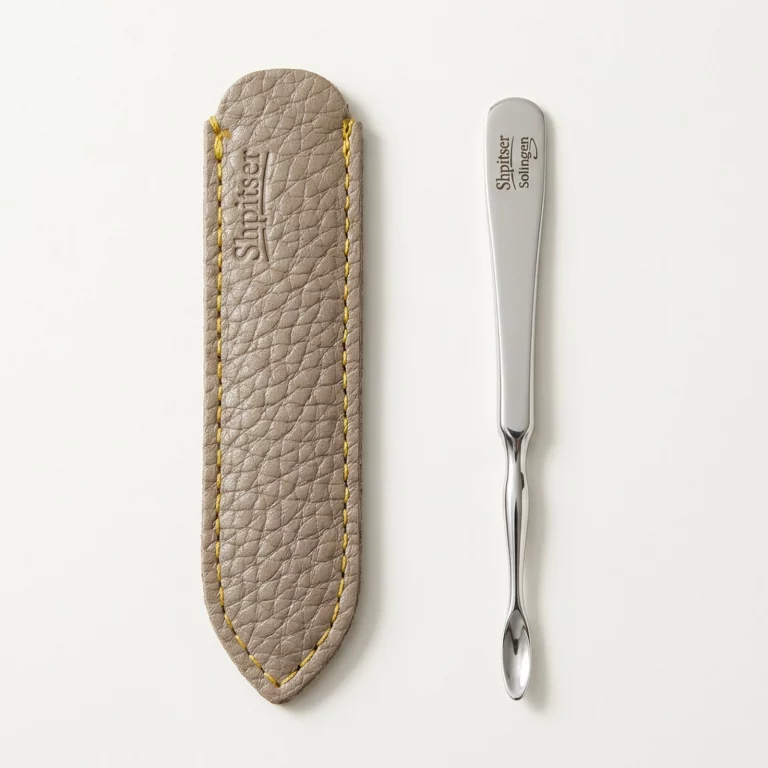
Instruments where this matters
Questions we get
Why is cutting the corner out the wrong move?
It leaves a spike under the fold that grows forward into the skin. The relief lasts days; the cause is reinforced.
How should toenails be cut?
Straight across, level with the tip, with the corners smoothed by file rather than cut back. Slightly long is safer than slightly short.
When does it need a professional?
Redness spreading, swelling, discharge or a nail that is painful to touch. At that point it is a medical matter, not a grooming one.
*This page explains a word, nothing more. It is not medical advice and does not replace a consultation about a specific condition of the nail or the skin around it.
The living fold of skin at the base of the nail. It seals the gap between nail and finger, which is why it is the one part that should not be cut.
The skin sealing the underside of the nail where the free edge lifts away. Sensitive, easily injured, and the reason short nails can feel tender.
The rims of skin framing the nail on three sides. They hold the plate in place and, along the sides, are where most manicure injuries happen.
The thin band of dead tissue that the nail carries out from under the skin fold. It is the part that can be removed — unlike the living fold behind it.