Nail fold
The frame around the nail
Three folds of skin hold the nail plate: one at the base — the eponychium — and one along each side. The side folds are usually called the lateral nail folds, or collectively the perionychium. They keep the plate seated and close the gap along its edges.
In short
- Where: base and both sides of the nail
- Their job: holding the plate and sealing its edges
- Risk zone: the side folds, where cutting into the corner starts trouble
Warning signs
Redness, swelling and warmth along a fold mean the seal has been broken. That is a reason to stop working on it, not to work harder.
Where the injuries come from
Two habits account for most of them: cutting the nail down into the corner, which leaves a spike under the fold, and trimming the side skin to a neat line, which removes the seal. Both feel tidy and both create the problem they were meant to prevent — see ingrown nail.
Working around them safely
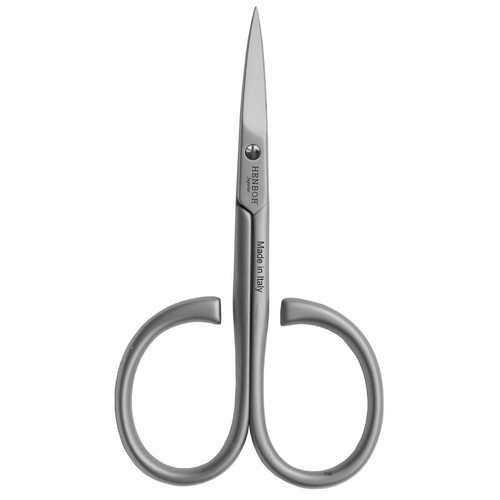
Cut the nail straight, follow the edge with a file rather than a blade, and take away only skin that has already lifted. Fine-pointed scissors are for that loose tissue; they are not a way to reshape a living fold.
Instruments where this matters
Questions we get
What is the difference between the nail folds and the eponychium?
The eponychium is the fold at the base. The lateral folds run along the sides. Together they frame the nail on three sides.
Why do the sides get sore so often?
Because that is where nails are cut down into the corner and where hangnails start. The skin there is thin and directly over bone.
Should the side skin be trimmed?
Only loose tissue that has already separated. Cutting into the fold to widen the nail line invites both infection and an ingrown edge.
*This page explains a word, nothing more. It is not medical advice and does not replace a consultation about a specific condition of the nail or the skin around it.
Skin that has grown forward and attached to the nail plate itself. Not the same as an overgrown cuticle, and not something to scrape away by force.
The pale half-moon at the base of the nail — the visible front edge of the matrix, where the nail is still forming and still soft.
The part of the nail that has grown past the fingertip and is no longer attached to the bed — the only part that is actually being cut or filed.
A nail edge pressing into the skin fold beside it. Most often started by cutting the corner down — and made worse by cutting it again.